Learn / n-px
What is an N-PX filing?
N-PX is the annual proxy voting record filed by registered investment companies under Rule 30b1-4 of the Investment Company Act of 1940. It discloses every proxy ballot the fund voted on between July 1 and June 30 — providing the public record of which way the fund-manager voted on board elections, say-on-pay, M&A, shareholder proposals, and every other DEF 14A matter.
Last updated: 2026-05-01. Source: SEC EDGAR.
Who files an N-PX, and when
Every registered investment company that holds voting securities — mutual funds, ETFs, closed-end funds, BDCs — must file N-PX by August 31 each year, covering the 12-month period ending June 30. The structure is designed so that fund-manager proxy votes from any given annual-meeting season become public no later than two months after the season closes.
The 2022 SEC rule amendments expanded N-PX considerably. Beyond the original baseline (vote-by-vote disclosure with proposal text), filers now disclose how they voted on shareholder proposals separately from management proposals, with structured XML data that enables cross-filer comparison at scale.
What's inside an N-PX
- Every voted ballot — the issuer's name, the meeting date, the proposal text, who made the proposal (management, shareholder), the fund's vote (For, Against, Withhold, Abstain), and whether the vote followed or opposed management.
- Categorical tagging (2022+) — each proposal tagged by category (director election, executive compensation, audit, capital structure, environment, social, governance, etc.) for structured data analysis.
- Securities-lending disclosure — discloses positions that were on loan as of the record date and therefore could not be voted (because voting rights transfer with the loaned security).
- Per-fund vs per-series breakdown — for trust filers with multiple fund series, votes are broken out per series so investors can see how their specific fund voted (not just the parent complex).
How smart-money researchers read N-PX
N-PX is the cleanest public-record window into institutional-investor governance views. The patterns are durable: BlackRock's post-2020 climate-vote shifts, Vanguard's evolving position on board independence, State Street's diversity-disclosure campaigns — all traceable filing-by-filing in N-PX.
Cross-fund analysis is where N-PX compounds. Comparing how two large fund complexes voted the same ballot on the same issuer shows the governance fault lines that aren't visible in press releases or proxy advisor summaries. The 2022 amendments specifically made this cross-filer comparison feasible by mandating structured XML.
Our view
N-PX is the single best free dataset for understanding institutional governance preferences. Most retail-fund holders never read it; very few financial journalists cite it; index-fund disclosure mostly happens through annual ESG reports that paraphrase the underlying N-PX. The raw filings tell a much cleaner story. If you hold an index fund and you wonder whether your fund manager actually votes the way you'd want them to vote, N-PX is the unambiguous public-record answer.
Related
Sister-property applied analysis
SecFilingDex catalogs the filings. For applied analysis on the same SEC corpus — narrowed to tracked superinvestors with framework + POV — see the sister site:
- HoldLens: Smart-money signals across 30 tracked superinvestors — Proxy-voting patterns from N-PX overlay the 13F position data HoldLens tracks — manager governance views revealed by votes complement the positioning views revealed by holdings.
Reading on filings
Understanding the form is step one; reading one is step two. These are the references that help with the second part.
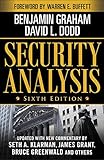 Security Analysis — Benjamin Graham & David Dodd
The reference on reading a filing and valuing what is inside it. Dense, and still the book the rest cite.
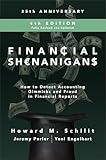 Financial Shenanigans — Howard M. Schilit
How accounting manipulation actually shows up in disclosures — written around real filings and what gave them away.
 Financial Statement Analysis — Martin S. Fridson & Fernando Alvarez
A working guide to the statements inside a 10-K or 20-F, including where the notes matter more than the headline numbers.
 The Intelligent Investor — Benjamin Graham
The plain-language starting point if the filings are new to you and the vocabulary is the obstacle.
 The Essays of Warren Buffett — Lawrence A. Cunningham (ed.)
Shareholder letters organised by theme — a filer's own account of what disclosure is for, from the reporting side.
Several of these are on Audible — free trial — Graham and Fridson both read well as audio if you are commuting.
Book links go to Amazon. As an Amazon Associate, SecFilingDex earns from qualifying purchases, at no extra cost to you. The filings data on this site is free and never changes based on these links.
Glossary
- N-PX
- Annual proxy-voting record filing by registered investment companies under Rule 30b1-4 of the Investment Company Act of 1940. Covers July 1 through June 30; due August 31. Discloses every proxy vote cast by the fund during the period.
- Rule 30b1-4
- The 1940-Act rule requiring N-PX. Adopted January 2003 to bring transparency to fund proxy voting. 2022 amendments substantially expanded categorical tagging, structured XML, and shareholder-proposal disclosure.
- Securities Lending
- The practice of lending portfolio securities to short-sellers and other counterparties for a fee. Material to N-PX because loaned securities cannot be voted by the fund — voting rights transfer with the security. Funds must disclose loaned-and-unvoted positions.
- Proxy Advisor
- Firm issuing voting recommendations to institutional investors. ISS and Glass Lewis collectively influence ~90% of U.S. institutional proxy votes. Their recommendations are visible upstream of N-PX as the unstated default for many fund managers' votes.
- Categorical Tagging
- The structured-data classification of each proxy proposal by category (director election, executive compensation, environment, social, governance, etc.) introduced by the 2022 N-PX amendments. Enables cross-fund comparison and aggregate ESG-vote analysis.