Learn / n-csr
What is an N-CSR filing?
N-CSR is the certified annual or semi-annual shareholder report filed by registered investment companies — mutual funds, ETFs, and closed-end funds — under Rule 30b2-1 of the Investment Company Act of 1940. It is the fund-industry counterpart to the 10-K for retail-fund holders, containing audited financial statements + the principal executive officer's Sarbanes-Oxley certification.
Last updated: 2026-05-01. Source: SEC EDGAR.
Who files an N-CSR, and when
Every U.S. registered investment company (mutual fund, ETF, closed-end fund, BDC) files an N-CSR within 10 days after the report is sent to shareholders. The annual N-CSR (covering the fund's fiscal year) requires audited financials. The semi-annual N-CSRS covers the six-month interim period and contains unaudited financials.
Funds whose fiscal year ends December 31 typically file N-CSR in late February through early March. ETF complexes with January or July fiscal years are spread across the calendar. The report itself must reach shareholders within 60 days of period-end; N-CSR follows in EDGAR within 10 days of mailing.
What's inside an N-CSR
- Audited financial statements — schedule of investments, statement of assets and liabilities, statement of operations, statement of changes in net assets, financial highlights, notes.
- Schedule of investments — every holding the fund owned as of the reporting date, with par value, market value, and percentage of net assets. The portfolio surface mutual-fund analysts read most carefully.
- Expense ratios + turnover — total expense ratio breakdown (management, 12b-1, other) and portfolio turnover rate. The cost-side data that determines a fund's long-term net return.
- Approval of advisory contract — board discussion of the advisory-contract renewal, with the substantive factors required by Section 15(c) of the 1940 Act. The single best window into board independence in fund governance.
- SOX certifications — principal executive and financial officer certifications (302/906) attesting to the accuracy of the financials. Same legal standard as 10-K certifications.
N-CSR vs N-PORT — different scopes for different audiences
N-CSR is the periodic annual/semi-annual narrative report — financial statements, fund-strategy commentary, advisory-contract review. N-PORT is the SEC's monthly portfolio-snapshot filing (publicly available quarterly), which surfaces month-end holdings without the narrative wrapper.
For fundamental fund research, both filings matter: N-CSR gives you the audited expense + governance picture (annual); N-PORT gives you the monthly position-level drift. Funds whose N-CSR shows aggressive trading need to show consistent N-PORT month-to-month patterns to back up the narrative.
Our view
N-CSR is one of the most underwatched filings in retail-fund research. Most retail mutual-fund holders never read it. But every fund — including the S&P 500 index fund in your 401(k) — files one annually with audited financials and a verbatim advisory-contract review that tells you exactly what the board negotiated on your behalf. The advisory-contract section is the single best read in the entire fund-disclosure universe; it's where governance breaks down or holds up in plain English.
Related
Sister-property applied analysis
SecFilingDex catalogs the filings. For applied analysis on the same SEC corpus — narrowed to tracked superinvestors with framework + POV — see the sister site:
- HoldLens: Smart-money signals across 30 tracked superinvestors — Several tracked managers run mutual funds or ETFs in addition to private hedge funds. Their N-CSR filings are the public-record alternative to 13F when the vehicle is a registered investment company.
Reading on filings
Understanding the form is step one; reading one is step two. These are the references that help with the second part.
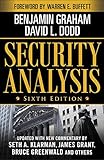 Security Analysis — Benjamin Graham & David Dodd
The reference on reading a filing and valuing what is inside it. Dense, and still the book the rest cite.
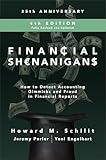 Financial Shenanigans — Howard M. Schilit
How accounting manipulation actually shows up in disclosures — written around real filings and what gave them away.
 Financial Statement Analysis — Martin S. Fridson & Fernando Alvarez
A working guide to the statements inside a 10-K or 20-F, including where the notes matter more than the headline numbers.
 The Intelligent Investor — Benjamin Graham
The plain-language starting point if the filings are new to you and the vocabulary is the obstacle.
 The Essays of Warren Buffett — Lawrence A. Cunningham (ed.)
Shareholder letters organised by theme — a filer's own account of what disclosure is for, from the reporting side.
Several of these are on Audible — free trial — Graham and Fridson both read well as audio if you are commuting.
Book links go to Amazon. As an Amazon Associate, SecFilingDex earns from qualifying purchases, at no extra cost to you. The filings data on this site is free and never changes based on these links.
Glossary
- N-CSR
- Certified annual shareholder report filed by registered investment companies under Rule 30b2-1 of the Investment Company Act of 1940. Contains audited financial statements and the SOX 302/906 certifications by principal executive and financial officers.
- N-CSRS
- Certified semi-annual shareholder report. The interim companion to N-CSR. Contains unaudited financials covering the first six months of the fiscal year. Required under the same Rule 30b2-1.
- Investment Company Act of 1940
- The federal statute regulating registered investment companies — mutual funds, ETFs, closed-end funds, BDCs. Establishes the 1940-Act regulatory regime (board independence, fee disclosure, distribution channels) distinct from the 1933/34 Acts applicable to operating companies.
- Advisory Contract Review
- The board's annual evaluation of the fund's advisory contract under Section 15(c) of the 1940 Act. Required disclosure in N-CSR; must address nature/quality of services, fees, profitability, economies of scale, and benefits to the adviser. The substantive governance check in registered-fund oversight.
- N-PORT
- Monthly portfolio-holdings filing required of registered open-end funds. Quarterly N-PORT (covering the third month of each quarter) becomes public 60 days after period-end. Complements N-CSR's annual narrative with monthly position-level disclosure.