Learn / 10-q-a
What is a 10-Q/A filing?
10-Q/A is an amendment to a previously-filed Form 10-Q quarterly report. Used to restate quarterly financials, correct errors, add omitted disclosure, or respond to SEC staff comments. The Explanatory Note at the front of every 10-Q/A tells you which category and why the amendment was necessary.
Last updated: 2026-05-01. Source: SEC EDGAR.
Who files a 10-Q/A, and when
Any registrant that has previously filed a Form 10-Q can file a 10-Q/A to amend that prior filing. There is no statutory deadline — amendments may be filed at any time. In practice, 10-Q/A filings cluster in three windows: (a) days-to-weeks after the original 10-Q if a material error is caught immediately; (b) months later as part of an annual-audit reconciliation that surfaces quarterly mis-statements; (c) years later as part of a full restatement (often coordinated across multiple quarters and the related 10-K).
Note that 10-Q/A is distinct from a Non-Reliance 8-K (Item 4.02) — the 8-K announces that prior financials cannot be relied on; the 10-Q/A is the substantive restatement document. The two filings often appear within days of each other; the 8-K precedes the 10-Q/A as the formal investor-facing notice.
What's inside a 10-Q/A — the Explanatory Note
The Explanatory Note at the front of a 10-Q/A is the most important section. It states:
- What the amendment changes — specific line items being restated, specific Items being amended (Part I Item 1 Financial Statements, Part I Item 2 MD&A, Part II Item 4 Controls, etc.).
- Why the amendment was necessary — restatement of revenue recognition, correction of cut-off error, deferred-tax mis-application, classification change, etc.
- Whether prior financials should not be relied on — explicit cross-reference to any Item 4.02 8-K filed in connection with the amendment.
- Internal-control conclusions — whether the restatement reflects a material weakness in internal control over financial reporting (ICFR). If yes, the Item 4 conclusion in the original 10-Q is necessarily revised.
The body of the 10-Q/A then carries the restated financial statements + revised MD&A discussion + whatever other Items required amendment. Unchanged Items are typically incorporated by reference rather than re-disclosed.
Why 10-Q/A filings are high-signal events
A 10-Q/A is almost never benign for the share price. The Explanatory Note tells you exactly what management is conceding was wrong; the restated financials show the magnitude. Restatement events typically see negative abnormal returns in the 5-10 day window post-filing, with magnitude correlated to: (a) percentage change in reported income, (b) whether a material weakness in ICFR is disclosed, (c) auditor turnover within 12 months, and (d) whether the SEC has commenced a formal inquiry.
The Sarbanes-Oxley Section 906 certification on the 10-Q/A is signed afresh by the CEO and CFO; the certification language is the same as on a clean 10-Q, but signing it on a restatement document carries personal legal exposure that operating executives are aware of.
Our view
A 10-Q/A is one of the highest-signal disclosure events a public company files. Every 10-Q/A has a story; the Explanatory Note usually tells it in plain language. Restatements correlate strongly with subsequent CEO/CFO departures (12-month risk roughly 3x baseline), with going-concern qualifications, and with SEC enforcement. Reading the 10-Q/A Explanatory Note when one shows up in a tracked-superinvestor position is a 5-minute pre-mortem on a stock that has just told the market it had something wrong on its books.
See live data
Browse live 10-Q/A filings — 72 filings indexed. Updated as new EDGAR submissions are ingested.
Related
Sister-property applied analysis
SecFilingDex catalogs the filings. For applied analysis on the same SEC corpus — narrowed to tracked superinvestors with framework + POV — see the sister site:
- HoldLens: Event Score — quantifying material events — 10-Q/A restatements register high on HoldLens's Event Score; combined with the Item 4.02 8-K that typically precedes them, the signal is doubly weighted.
Reading on filings
Understanding the form is step one; reading one is step two. These are the references that help with the second part.
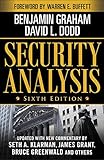 Security Analysis — Benjamin Graham & David Dodd
The reference on reading a filing and valuing what is inside it. Dense, and still the book the rest cite.
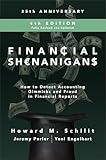 Financial Shenanigans — Howard M. Schilit
How accounting manipulation actually shows up in disclosures — written around real filings and what gave them away.
 Financial Statement Analysis — Martin S. Fridson & Fernando Alvarez
A working guide to the statements inside a 10-K or 20-F, including where the notes matter more than the headline numbers.
 The Intelligent Investor — Benjamin Graham
The plain-language starting point if the filings are new to you and the vocabulary is the obstacle.
 The Essays of Warren Buffett — Lawrence A. Cunningham (ed.)
Shareholder letters organised by theme — a filer's own account of what disclosure is for, from the reporting side.
Several of these are on Audible — free trial — Graham and Fridson both read well as audio if you are commuting.
Book links go to Amazon. As an Amazon Associate, SecFilingDex earns from qualifying purchases, at no extra cost to you. The filings data on this site is free and never changes based on these links.
Glossary
- 10-Q/A
- Amendment to a previously filed Form 10-Q under the Securities Exchange Act of 1934. Used to restate financial statements, correct errors, or add disclosure. The Explanatory Note at the front identifies what changed and why.
- Restatement
- A revision of previously-issued financial statements to correct material errors. Distinct from a routine revision: restatements are public concessions that prior financials cannot be relied on, typically triggering a Non-Reliance 8-K (Item 4.02) followed by the substantive 10-Q/A or 10-K/A.
- Item 4.02 8-K
- 8-K Item 4.02 — 'Non-Reliance on Previously Issued Financial Statements or a Related Audit Report or Completed Interim Review.' The formal investor-facing notice that prior financials cannot be relied on. Triggers the requirement to file a substantive amendment (10-Q/A or 10-K/A) restating the affected period.
- Material Weakness
- A deficiency in internal control over financial reporting (ICFR) such that there is a reasonable possibility that a material misstatement will not be prevented or detected on a timely basis. Disclosed under Item 4 of 10-Q (or Item 9A of 10-K). Material weaknesses frequently accompany 10-Q/A restatements.
- SOX 302/906 Certifications
- Sarbanes-Oxley Act of 2002 sections requiring the CEO and CFO to personally certify periodic reports. Section 302 covers accuracy and ICFR effectiveness; Section 906 carries criminal-penalty exposure for knowingly false certification. Re-signed afresh on every 10-Q/A.