Learn / nt-10-k
What is an NT 10-K filing?
NT 10-K is the SEC notification of inability to timely file an annual report on Form 10-K. Filed under Rule 12b-25, it grants the registrant a 15-calendar-day extension. The filing requires the registrant to disclose why the 10-K is late — and that disclosure is often more material than the eventual 10-K itself.
Last updated: 2026-05-01. Source: SEC EDGAR.
Who files an NT 10-K, and when
Rule 12b-25 of the Securities Exchange Act of 1934 requires any registrant unable to file a periodic report (10-K, 10-Q, 20-F, 11-K, N-CSR, etc.) by its due date to file a Notification of Late Filing on Form 12b-25. The form has a different name in EDGAR depending on which periodic report is being delayed — "NT 10-K" for 10-K delays, "NT 10-Q" for 10-Q delays.
NT 10-K must be filed no later than one business day after the original 10-K due date. Filing a timely NT 10-K automatically grants a 15-calendar-day extension — pushing the filer's actual deadline by 15 days without further SEC action.
What an NT 10-K must disclose
Part III of Form 12b-25 requires a narrative explanation of why the filing could not be made on time. The SEC does not accept boilerplate. Common acceptable categories:
- Accounting review delays — restatement-adjacent issues, revenue-recognition reconsiderations, going-concern evaluations.
- Auditor changes — new auditor engaged late; predecessor cooperating with data turnover.
- Material acquisition or divestiture — pro-forma financials for acquired/divested operations unavailable by the original deadline.
- Cybersecurity incident — disclosed under Item 1.05 of Form 8-K; recovery delays carry into year-end close.
- Litigation, investigation, or subpoena — outside counsel review of disclosure language pending; cannot finalize until resolved.
Part IV requires the registrant to estimate, where possible, the significant changes in results of operations from the corresponding prior period — a forward-look disclosure that the eventual 10-K will confirm or revise.
Why NT 10-Ks are material market signals
An NT 10-K filing is often the first public signal of a problem the issuer has been working through privately. Academic research and practitioner audits consistently find that NT 10-K filers experience: negative abnormal returns in the 5-10 day window following the NT filing, elevated short interest, and a meaningfully higher probability of subsequent restatement or going-concern qualification on the eventually-filed 10-K.
Not every NT 10-K signals trouble — some reflect benign logistical delays. But the Part III narrative usually tells you which kind you're reading. "Internal control review", "auditor consultation on accounting treatment", and "ongoing SEC inquiry" are the high-alert phrases.
Our view
The NT 10-K is one of the most underwatched filings in the SEC catalog. Most retail investors never see them; they don't fire any common screener. But when an issuer files an NT 10-K — especially with a Part III narrative citing accounting review or auditor consultation — the eventual 10-K is materially more likely to contain bad news than a comparable on-time filing. Reading the Part III narrative is a 5-minute pre-mortem on a stock that's about to surprise the market.
Related
Sister-property applied analysis
SecFilingDex catalogs the filings. For applied analysis on the same SEC corpus — narrowed to tracked superinvestors with framework + POV — see the sister site:
- HoldLens: Event Score — quantifying material events — NT 10-K filings register on HoldLens's Event Score with elevated weighting — late annual reports are among the highest-signal events in the SEC corpus for tracked-superinvestor portfolios.
Reading on filings
Understanding the form is step one; reading one is step two. These are the references that help with the second part.
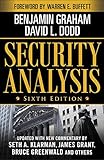 Security Analysis — Benjamin Graham & David Dodd
The reference on reading a filing and valuing what is inside it. Dense, and still the book the rest cite.
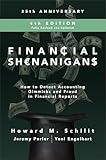 Financial Shenanigans — Howard M. Schilit
How accounting manipulation actually shows up in disclosures — written around real filings and what gave them away.
 Financial Statement Analysis — Martin S. Fridson & Fernando Alvarez
A working guide to the statements inside a 10-K or 20-F, including where the notes matter more than the headline numbers.
 The Intelligent Investor — Benjamin Graham
The plain-language starting point if the filings are new to you and the vocabulary is the obstacle.
 The Essays of Warren Buffett — Lawrence A. Cunningham (ed.)
Shareholder letters organised by theme — a filer's own account of what disclosure is for, from the reporting side.
Several of these are on Audible — free trial — Graham and Fridson both read well as audio if you are commuting.
Book links go to Amazon. As an Amazon Associate, SecFilingDex earns from qualifying purchases, at no extra cost to you. The filings data on this site is free and never changes based on these links.
Glossary
- NT 10-K
- Notification of inability to timely file an annual report on Form 10-K, filed under Rule 12b-25 of the Securities Exchange Act of 1934. Grants a 15-calendar-day extension when filed within one business day of the original due date.
- Rule 12b-25
- The SEC rule under Section 12 of the Exchange Act governing late-filing notifications for periodic reports. Implemented via Form 12b-25, which EDGAR indexes under the prefix 'NT' followed by the delayed report's form type.
- Form 12b-25
- The actual SEC form filed when an issuer cannot meet a periodic-report deadline. Appears in EDGAR as NT 10-K, NT 10-Q, NT 20-F, NT 11-K, or NT N-CSR depending on which periodic report is delayed.
- Restatement
- A revision of previously-issued financial statements to correct errors discovered after issuance. Restatements often follow NT 10-Ks where Part III cited 'review of accounting matters' as the cause of the delay.
- Going Concern
- An auditor's qualification expressing substantial doubt about the issuer's ability to continue operating for the next 12 months. NT 10-K filings citing 'going-concern evaluation' as the delay reason precede formal going-concern opinions ~40% of the time per public-market academic studies.