Learn / form-144
What is a Form 144 filing?
Form 144 is the SEC notice of proposed sale of restricted or control securities filed by an affiliate of the issuer. Required under Rule 144 of the Securities Act when the affiliate intends to sell more than 5,000 shares or $50,000 in aggregate value during any three-month period. Form 144 announces intent; Form 4 reports actual execution.
Last updated: 2026-05-01. Source: SEC EDGAR.
Who files a Form 144, and when
Rule 144 under the Securities Act of 1933 governs the public resale of "restricted securities" (shares acquired in unregistered transactions like private placements) and "control securities" (shares held by issuer affiliates — typically officers, directors, and 10%+ holders).
An affiliate must file Form 144 with the SEC concurrently with placing a sell order if the sale would exceed the Rule 144 reporting threshold: more than 5,000 shares or aggregate sales of more than $50,000 during any preceding three-month period.
The filing is a notice of intent. The actual sale, when executed, is reported separately on Form 4 (the insider transactions filing). The two filings work in tandem — 144 announces, 4 confirms.
What's inside a Form 144
- Affiliate identification — name, relationship to issuer (officer, director, 10%+ holder, etc.).
- Securities to be sold — class, number of shares, aggregate market value, approximate date of proposed sale.
- Acquisition history — date of original acquisition, nature of acquisition (stock-based compensation, private placement, public market, etc.), payment information (cash, services, etc.).
- Broker information — the broker through whom the sale will be effected, broker's representation regarding compliance with Rule 144's manner-of-sale conditions.
- Prior sales — sales of the same class by the same affiliate during the preceding three months, supporting the volume- limitation analysis.
Form 144 vs Form 4 — read them together
A Form 144 typically appears 1-5 trading days BEFORE the corresponding Form 4. The 144 telegraphs the sell decision; the 4 confirms execution and reports the volume-weighted average price. The two-filing structure exists because Rule 144's volume limitation requires the affiliate to commit to a maximum, which the SEC must see before the trades are placed.
Practical pattern-reading: a Form 144 followed by a Form 4 at materially LOWER share count than the 144 announced means the affiliate sold less than they originally intended — often a signal of seller hesitation or favorable trading conditions allowing the lower volume to clear at acceptable price. The opposite (Form 4 at the maximum 144 volume across a tight trading window) signals aggressive selling.
Our view
Form 144 is one of the most underwatched filings in the SEC catalog because the actual transaction reporting happens elsewhere (Form 4). But the 144 contains forward-looking information — the affiliate's intent — that Form 4 does not. Reading 144s for tracked-superinvestor portfolio companies gives a 1-5 day head start on the same-day Form 4 selling pressure. The signal is structurally undervalued in retail-investor screeners.
Related
Sister-property applied analysis
SecFilingDex catalogs the filings. For applied analysis on the same SEC corpus — narrowed to tracked superinvestors with framework + POV — see the sister site:
- HoldLens: Insider Score — quantifying Form 4 signals — HoldLens's Insider Score reads Form 4 executions. The companion Form 144 announcements that precede Form 4 sells are an upstream signal — useful for sequencing insider-selling trades against earnings windows.
- HoldLens: Congressional stock trading and the STOCK Act — Congressional disclosures parallel the 144/4 structure — periodic transaction reports announce, then settle the position in the public record.
Reading on filings
Understanding the form is step one; reading one is step two. These are the references that help with the second part.
 Security Analysis — Benjamin Graham & David Dodd
The reference on reading a filing and valuing what is inside it. Dense, and still the book the rest cite.
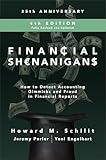 Financial Shenanigans — Howard M. Schilit
How accounting manipulation actually shows up in disclosures — written around real filings and what gave them away.
 Financial Statement Analysis — Martin S. Fridson & Fernando Alvarez
A working guide to the statements inside a 10-K or 20-F, including where the notes matter more than the headline numbers.
 The Intelligent Investor — Benjamin Graham
The plain-language starting point if the filings are new to you and the vocabulary is the obstacle.
 The Essays of Warren Buffett — Lawrence A. Cunningham (ed.)
Shareholder letters organised by theme — a filer's own account of what disclosure is for, from the reporting side.
Several of these are on Audible — free trial — Graham and Fridson both read well as audio if you are commuting.
Book links go to Amazon. As an Amazon Associate, SecFilingDex earns from qualifying purchases, at no extra cost to you. The filings data on this site is free and never changes based on these links.
Glossary
- Form 144
- SEC notice of proposed sale of restricted or control securities by an affiliate of the issuer, filed under Rule 144 of the Securities Act of 1933. Required when proposed sales exceed 5,000 shares or $50,000 aggregate value in any 3-month period.
- Rule 144
- The safe-harbor rule under the Securities Act permitting the public resale of restricted and control securities under specified conditions: holding-period requirement, current public information, volume limitation, manner of sale, and Form 144 filing.
- Affiliate
- A person that controls, is controlled by, or is under common control with the issuer — typically officers, directors, and 10%+ shareholders. Defined in Rule 144(a)(1). The 'affiliate' classification triggers Form 144 filing obligations.
- Restricted Securities
- Securities acquired in unregistered transactions (private placements, employment-grant vesting, gifts, etc.). Subject to Rule 144 holding periods (6 months for reporting issuers, 12 months for non-reporting) and resale conditions.
- Volume Limitation
- Rule 144's restriction that affiliates may not sell more than the greater of (a) 1% of the outstanding class or (b) the average weekly trading volume of the prior 4 weeks during any 3-month period. Form 144 declares the proposed sale's compliance with this limit.