Learn / f-1
What is an F-1 filing?
F-1 is the SEC initial registration statement filed by foreign private issuers — non-U.S. companies registering shares for public sale in the U.S. for the first time. It is the foreign-issuer equivalent of the S-1, adapted to accommodate IFRS or home-country GAAP financial statements and home-country governance practices.
Last updated: 2026-05-01. Source: SEC EDGAR.
Who files an F-1, and when
An F-1 is filed under the Securities Act of 1933 by a foreign private issuer (FPI) registering an offering of securities for the first time in the United States. "First time" is the key word: subsequent primary offerings by the same FPI typically use F-3 (analogous to S-3), which permits incorporation by reference to the issuer's ongoing 20-F annual reports.
F-1 filings cluster around IPOs of large non-U.S. companies seeking U.S. exchange listings — companies like Alibaba (2014), Tencent Music (2018), and Arm Holdings (2023). The filing is the public document investors read to evaluate the offering during the roadshow period.
What's inside an F-1
The F-1 prospectus is structured similarly to an S-1 but with foreign-issuer adaptations:
- Risk Factors — including foreign-issuer-specific risks (currency, political, regulatory regime, controlled-company structure, dual-class share governance).
- MD&A in IFRS or home GAAP — financials may be in International Financial Reporting Standards or home-country GAAP. U.S.-GAAP reconciliation has not been required since 2007 for IFRS filers.
- Description of share capital — class structure, voting rights, transfer restrictions, depository receipt mechanics (ADR ratio if applicable).
- Material agreements — concession agreements, government contracts, key customer contracts, controlled-company arrangements.
- Underwriting — same content as S-1: book-running managers, lock-up periods, greenshoe option, allocation method.
F-1 amendments and the registration process
The initial F-1 is followed by one or more amendments (F-1/A) as the SEC staff issues comments and the issuer responds. Pricing-period amendments contain the final share-count, price-range, and selling-shareholder disclosures. The final F-1/A immediately before effectiveness is typically the document underwriters use for the final marketing push.
Once the SEC declares the F-1 effective, the issuer files the final prospectus (424B form), the shares price, and trading commences. The F-1 itself is the durable public record — every fact in the final prospectus traces back to an F-1 or F-1/A.
Our view
F-1s are read most carefully by professionals who already know what they're looking for: governance carve-outs, controlled-company arrangements, dual-class share structures, and the specific home-country regulatory regime the issuer is filing from. Retail readers should skim the risk-factor section twice and ignore the 200-page MD&A unless they have the time to compare it line-by-line against home-country audited filings. The single most-mispriced foreign-IPO risk in the historical record has been governance, not accounting.
Related
Sister-property applied analysis
SecFilingDex catalogs the filings. For applied analysis on the same SEC corpus — narrowed to tracked superinvestors with framework + POV — see the sister site:
- HoldLens: Smart-money signals across 30 tracked superinvestors — Some tracked superinvestors (e.g., Burry, Klarman, Ackman variants) maintain non-trivial foreign-issuer positions. The post-IPO 13F quarter following an F-1 effective date is where institutional buyers first appear on the public record.
Reading on filings
Understanding the form is step one; reading one is step two. These are the references that help with the second part.
 Security Analysis — Benjamin Graham & David Dodd
The reference on reading a filing and valuing what is inside it. Dense, and still the book the rest cite.
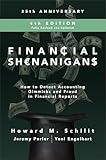 Financial Shenanigans — Howard M. Schilit
How accounting manipulation actually shows up in disclosures — written around real filings and what gave them away.
 Financial Statement Analysis — Martin S. Fridson & Fernando Alvarez
A working guide to the statements inside a 10-K or 20-F, including where the notes matter more than the headline numbers.
 The Intelligent Investor — Benjamin Graham
The plain-language starting point if the filings are new to you and the vocabulary is the obstacle.
 The Essays of Warren Buffett — Lawrence A. Cunningham (ed.)
Shareholder letters organised by theme — a filer's own account of what disclosure is for, from the reporting side.
Several of these are on Audible — free trial — Graham and Fridson both read well as audio if you are commuting.
Book links go to Amazon. As an Amazon Associate, SecFilingDex earns from qualifying purchases, at no extra cost to you. The filings data on this site is free and never changes based on these links.
Glossary
- F-1
- Initial registration statement under the Securities Act of 1933 filed by a foreign private issuer registering an offering of securities in the U.S. for the first time. The foreign-issuer equivalent of the S-1.
- F-1/A
- Amendment to a previously filed F-1. Multiple amendments are typical during the SEC review process, addressing staff comments and updating offering terms as the IPO process progresses.
- Foreign Private Issuer (FPI)
- A non-U.S. company that does not meet the SEC's definition of a U.S. domestic issuer. Eligibility allows use of foreign-issuer-specific forms (F-1, F-3, F-4, 20-F, 6-K) rather than U.S.-domestic forms (S-1, S-3, S-4, 10-K, 10-Q).
- F-3
- Short-form registration statement available to FPIs that have been reporting under the Exchange Act for at least 12 months. Permits incorporation by reference to ongoing 20-F filings. The foreign-issuer counterpart to S-3.
- ADR
- American Depositary Receipt. A U.S.-issued security representing shares of a foreign company held on deposit at a U.S. bank. Many F-1 offerings are of ADRs rather than ordinary shares; the F-6 form registers the depository facility itself.