Learn / 13h
What is a Form 13H filing?
Form 13H is the SEC large-trader identification filing. Any person — individual or entity — whose transactions in NMS securities equal or exceed the identifying-activity-level threshold ($20 million in a calendar day or $200 million in a month) must register with the SEC under Rule 13h-1.
Last updated: 2026-05-01. Source: SEC EDGAR.
Who files a 13H, and when
Rule 13h-1 under the Securities Exchange Act of 1934 requires "large traders" to identify themselves to the SEC by filing Form 13H within ten days of first crossing the threshold. The rule was adopted in 2011 in response to the May 2010 Flash Crash, when regulators struggled to identify high-volume market participants during the post-event audit.
The threshold is breached by either: (a) transactions aggregating $20 million in fair market value (or 2 million shares) during any single calendar day, or (b) transactions aggregating $200 million in fair market value (or 20 million shares) during any calendar month.
What's inside a 13H
- Large Trader ID (LTID) — assigned by the SEC. Once issued, the large trader provides the LTID to every broker-dealer that effects transactions on its behalf.
- Affiliate disclosure — entities under common control with the filer that also engage in NMS-security transactions. Hedge fund family complexes typically file consolidated 13H covering all advised funds.
- Business description — type of entity, primary business, regulatory registrations (RIA, broker-dealer, commodity pool, etc.).
- Trading strategy classification — broad categories (e.g., market making, statistical arbitrage, fundamental investing, hedging) selected from the SEC's pre-defined list.
13H amendments and continuing obligations
A 13H filer must file an annual amendment within 45 days of the calendar year-end (the Form 13H Annual Filing). Material changes to previously-reported information — affiliate additions, business reorganizations, regulatory-status changes — require a quarterly amendment within ten days of quarter-end during the quarter in which the change occurred.
Form 13H is NOT public in the same way 13F is. Filings are submitted via EDGAR but the content is treated as confidential by the SEC. Public availability is limited to the existence of the filing and aggregate statistics — not the trading-strategy classifications or affiliate lists. This is by design: large-trader identification is for SEC surveillance, not retail-investor due diligence.
Our view
13H is the only mandatory SEC filing whose content the public never sees in full — a quiet exception to the disclosure ethos that governs every other Exchange Act filing. The existence of a 13H filer ID tells you the entity crossed the large-trader threshold; the rest is between the SEC and the trader. For market-structure researchers, the aggregate 13H statistics in the SEC's annual report are more useful than any individual filing.
Related
Sister-property applied analysis
SecFilingDex catalogs the filings. For applied analysis on the same SEC corpus — narrowed to tracked superinvestors with framework + POV — see the sister site:
- HoldLens: Smart-money signals across 30 tracked superinvestors — Every superinvestor in HoldLens's tracked universe is a 13H filer. The 13F filings HoldLens publishes are the only public window into what these large traders are actually doing.
Reading on filings
Understanding the form is step one; reading one is step two. These are the references that help with the second part.
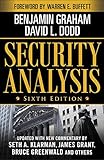 Security Analysis — Benjamin Graham & David Dodd
The reference on reading a filing and valuing what is inside it. Dense, and still the book the rest cite.
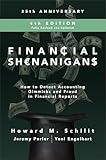 Financial Shenanigans — Howard M. Schilit
How accounting manipulation actually shows up in disclosures — written around real filings and what gave them away.
 Financial Statement Analysis — Martin S. Fridson & Fernando Alvarez
A working guide to the statements inside a 10-K or 20-F, including where the notes matter more than the headline numbers.
 The Intelligent Investor — Benjamin Graham
The plain-language starting point if the filings are new to you and the vocabulary is the obstacle.
 The Essays of Warren Buffett — Lawrence A. Cunningham (ed.)
Shareholder letters organised by theme — a filer's own account of what disclosure is for, from the reporting side.
Several of these are on Audible — free trial — Graham and Fridson both read well as audio if you are commuting.
Book links go to Amazon. As an Amazon Associate, SecFilingDex earns from qualifying purchases, at no extra cost to you. The filings data on this site is free and never changes based on these links.
Glossary
- Form 13H
- SEC large-trader identification filing required under Rule 13h-1. Filed within 10 days of first crossing the identifying-activity-level threshold ($20M/day or $200M/month in NMS securities). Annual amendment required.
- Identifying Activity Level
- The transaction-volume threshold triggering 13H registration: (a) $20 million in fair market value or 2 million shares during any single calendar day, or (b) $200 million or 20 million shares during any calendar month.
- Large Trader ID (LTID)
- The unique identifier the SEC issues to each 13H filer. The large trader supplies the LTID to every executing broker-dealer; broker-dealers report LTID-tagged transactions via the SEC's Electronic Blue Sheets system.
- NMS Security
- National Market System security. Defined by Regulation NMS as any security registered under Section 12 of the Exchange Act and traded on a national securities exchange — essentially all U.S. listed stocks and options.
- Rule 13h-1
- The SEC rule under Section 13(h) of the Exchange Act that establishes the large-trader reporting regime. Adopted July 2011 (Release No. 34-64976), effective October 2011, in response to the May 2010 Flash Crash.