Learn / 11-k
What is an 11-K filing?
11-K is the annual report that issuers file with the SEC for employee stock-purchase, savings, and similar plans — typically 401(k)s holding employer stock and ESPPs. Required under Section 15(d) of the Exchange Act when the plan's interests are registered.
Last updated: 2026-09-10. Source: SEC EDGAR.
Who files an 11-K, and when
Section 15(d) of the Securities Exchange Act of 1934 and Rule 15d-21 require an annual report on Form 11-K for any employee stock-purchase, savings, or similar plan interest in respect of which a registration statement (typically a Form S-8) is in effect. The plan itself — not the issuer — is the registrant.
Under the SEC's General Instructions to Form 11-K, the report is generally due within 90 days after the plan's fiscal year-end. Plans subject to ERISA may file the plan financial statements within 180 days after the plan's fiscal year-end.
What's inside an 11-K
- Audited financial statements for the plan — typically statements of net assets available for benefits and statements of changes in net assets available for benefits.
- Schedule of assets held — itemizes investments by issuer and asset class, including the employer stock position.
- ERISA-required schedules where applicable — reportable transactions, party-in-interest disclosures, delinquent participant contributions.
- Plan administrator's certification — signed by a fiduciary, not the issuer's CFO.
Why 11-Ks exist alongside 10-Ks
A 10-K describes the issuer's consolidated finances. An 11-K describes the plan's separately-managed assets — even when the plan is a 401(k) of the same issuer. The two documents have different audited periods, different signers, and different scope. They are not interchangeable.
For investors, 11-Ks are valuable for two narrow reasons. First, they expose the employer-stock concentration in plan assets — a material risk factor Enron made famous. Second, they sometimes disclose fiduciary lawsuits and ERISA settlements that don't rise to 10-K materiality thresholds.
Our view
11-Ks are the most-skipped 1934-Act annual report in the SEC catalog — they sit between corporate disclosure and ERISA pension disclosure, and most retail investors never know they exist. But the schedule of plan assets is the single best lookup for how heavily employees themselves are betting on the stock — which is its own market signal.
See live data
Browse live 11-K filings — 43 filings indexed. Updated as new EDGAR submissions are ingested.
Related
Sister-property applied analysis
SecFilingDex catalogs the filings. For applied analysis on the same SEC corpus — narrowed to tracked superinvestors with framework + POV — see the sister site:
- HoldLens: Smart-money signals across 30 tracked superinvestors — Plan-asset concentration as an indirect signal — when employer-stock weighting drops materially YoY, it often precedes guidance shifts visible in tracked-manager 13Fs the following quarter.
Reading on filings
Understanding the form is step one; reading one is step two. These are the references that help with the second part.
 Security Analysis — Benjamin Graham & David Dodd
The reference on reading a filing and valuing what is inside it. Dense, and still the book the rest cite.
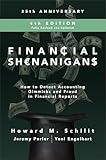 Financial Shenanigans — Howard M. Schilit
How accounting manipulation actually shows up in disclosures — written around real filings and what gave them away.
 Financial Statement Analysis — Martin S. Fridson & Fernando Alvarez
A working guide to the statements inside a 10-K or 20-F, including where the notes matter more than the headline numbers.
 The Intelligent Investor — Benjamin Graham
The plain-language starting point if the filings are new to you and the vocabulary is the obstacle.
 The Essays of Warren Buffett — Lawrence A. Cunningham (ed.)
Shareholder letters organised by theme — a filer's own account of what disclosure is for, from the reporting side.
Several of these are on Audible — free trial — Graham and Fridson both read well as audio if you are commuting.
Book links go to Amazon. As an Amazon Associate, SecFilingDex earns from qualifying purchases, at no extra cost to you. The filings data on this site is free and never changes based on these links.
Glossary
- 11-K
- Annual report on Form 11-K filed under Section 15(d) of the Securities Exchange Act of 1934 for employee stock-purchase, savings, and similar plans whose interests are registered (typically via Form S-8).
- 11-K/A
- An amendment to a previously filed 11-K. Used to restate plan-asset valuations, correct schedule errors, or add ERISA-required disclosures.
- ESPP
- Employee Stock Purchase Plan. A program permitting employees to buy issuer stock at a discount (typically 5-15% off market) via payroll deduction. ESPP interests must be registered on Form S-8; the plan reports annually on 11-K.
- ERISA
- Employee Retirement Income Security Act of 1974. The federal statute governing private-sector employee benefit plans. For Form 11-K timing, ERISA-covered plans may file the plan financial statements within 180 days after the plan's fiscal year-end instead of the general 90-day deadline.
- Form S-8
- Short-form registration statement for offering securities to employees under a stock-purchase, savings, or compensation plan. The companion filing whose existence triggers the 11-K annual-report obligation.